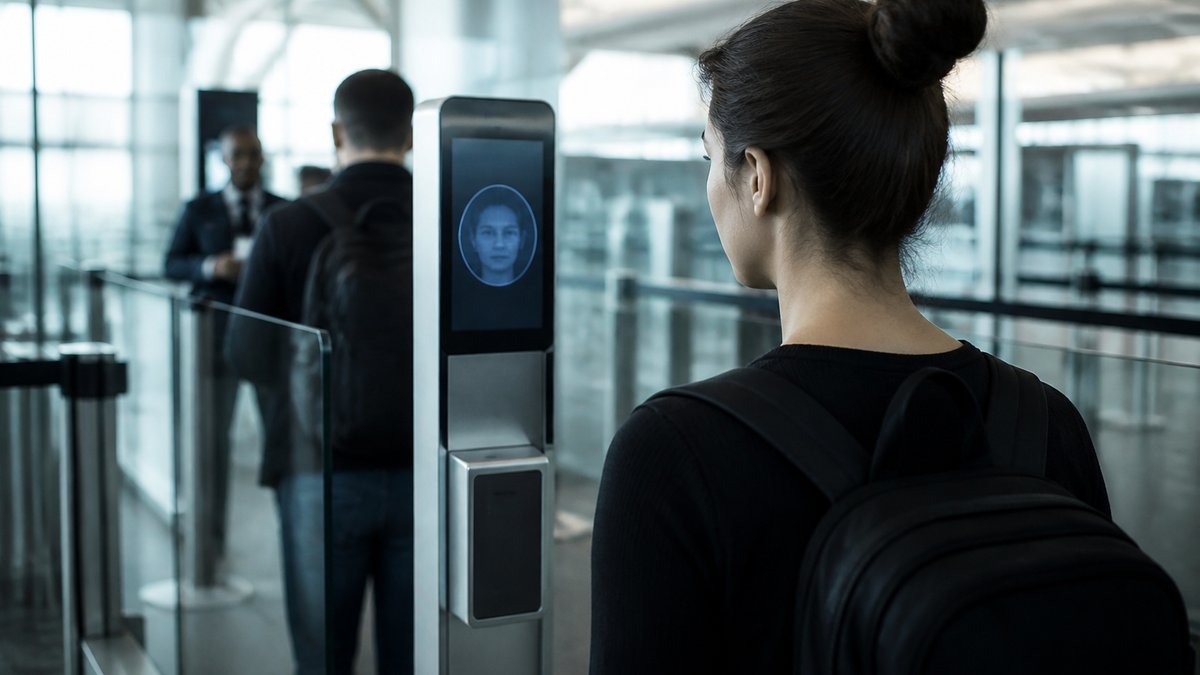
Imagine being prevented from boarding your flight due to a rigorous airport check, your phone unlocked against your will, and your personal data scrutinized. This is precisely what a student experienced in Cayenne, raising pressing questions about the limits of biometric checks. This case, which recently concluded with a decision by the administrative court of Guyana, highlights the complex issues of security and individual freedom in the digital age.
The essentials to remember
Imagine going to the airport, ready to embark on a long-planned trip. You have everything prepared: luggage checked, documents in hand. But at the moment of passing the check, everything changes. You are caught in an intensive verification process, your phone becomes the key to your privacy, and access to your data is done without your consent. This is what Antonin, a civil engineering student, experienced, raising crucial questions about the balance between security and individual freedom.
On August 24, 2026, Antonin, a civil engineering student, arrived at Félix Eboué airport in Cayenne with a ticket to Paris. He was quickly intercepted as part of the “100% control” system, aimed at identifying drug mules. It was not a random check but a systematic procedure applied to all passengers.
Events took a different turn when border police officers seized Antonin’s phone. According to him, he was forcibly held to use his face to unlock the device via facial recognition. This method, which bypasses active consent, raises serious questions about the use of biometrics.
Faced with this situation, the administrative court of Guyana was urgently seized. On August 27, 2026, the judge in chambers suspended the prefectural order prohibiting Antonin’s boarding. She ruled that the “100% control” system was an administrative, not judicial, police measure, which changes the applicable legal framework.
The magistrate noted the absence of tangible evidence to support the boarding ban. Antonin’s profile and account showed no inconsistencies justifying such a measure. Lacking sufficient evidence, the administration saw its decision annulled.
This case highlights the challenges posed by the increasing use of biometrics in security checks. Unlike a PIN code, facial recognition can be exploited without active cooperation, raising crucial questions about the protection of personal data and privacy.
Antonin’s case also raises questions about the management of digital evidence by authorities, especially when recordings are deleted without explanation. Security and confidentiality must be balanced to guarantee citizens’ fundamental rights.
Biometric checks, such as those used in the Antonin case, are increasingly common in airports worldwide. They promise enhanced security but also raise concerns about respecting individual freedoms. Discussions on the ethical use of facial recognition technologies in public places are multiplying.
Companies and governments must work together to establish clear regulations on the use of biometrics to protect individuals’ rights while ensuring public safety. Transparency and accountability are essential to build public trust in these advanced technologies.
Antonin’s situation in Cayenne reflects a broader issue in the digital security sector. Biometric data, by their very nature, pose unique challenges in terms of privacy protection. Incidents of forced unlocking, like this one, highlight the need for clear policies and ethical standards to govern their use.
In this context, companies like Clearview AI, specializing in facial recognition, have been criticized for their data collection practices. These discussions highlight the importance of a strong legislative framework to protect citizens’ rights in the digital age.
What makes facial recognition problematic in airport checks?
Facial recognition can be exploited without the individual’s active consent, raising questions about the protection of personal data and privacy.
How did the justice system react to the forced use of biometrics in this case?
The administrative court suspended the order prohibiting the student’s boarding, deeming the control procedure illegal and violating freedom of movement.
Why is the Antonin case significant for digital freedoms?
It highlights the issues related to the use of biometrics for controlling personal data and raises the question of respecting individual freedoms in the digital age.
What measures should be taken to regulate the use of biometrics?
It is essential to establish clear regulations and ethical standards to protect individuals’ rights while ensuring public safety.


