


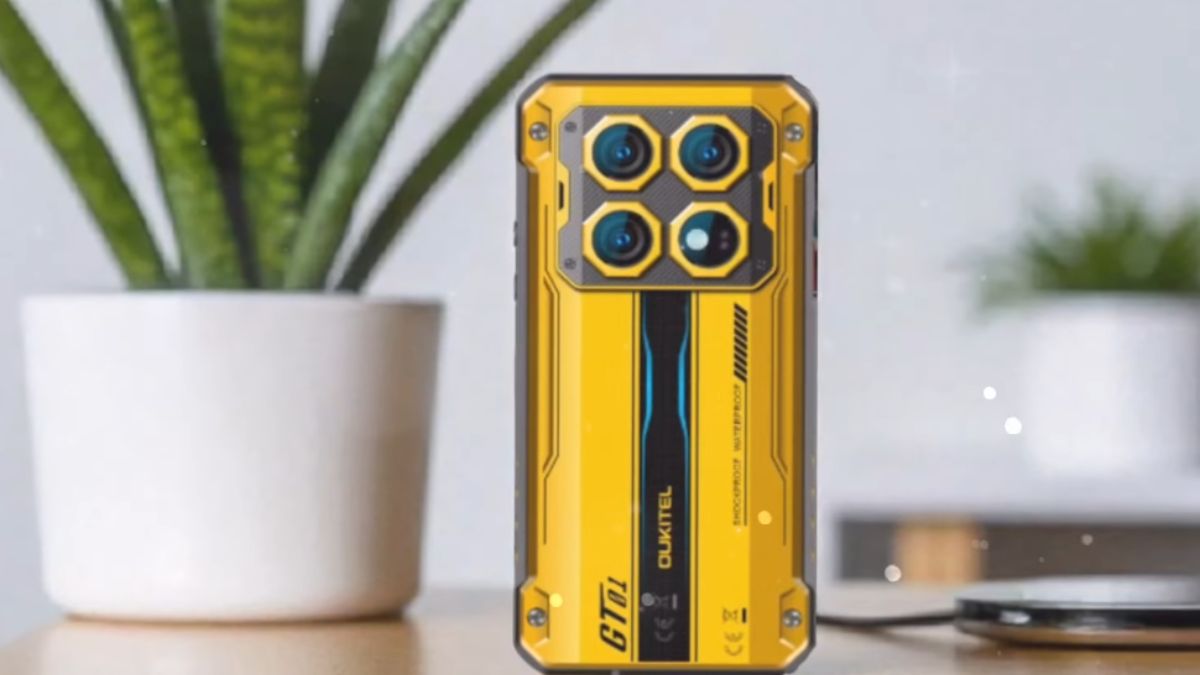
Oukitel is not new to the “ultra-resistant” phone segment. With the WP60, the Chinese brand promises a device designed for construction sites, hiking, and the most extreme environments. Reinforced casing, massive battery, and military certifications: everything suggests it could survive conditions where other models would fail.
But the question many are asking is simple: is the WP60 really unbreakable or just very sturdy? To find out, we need to go beyond the commercial speech and examine its real-world performance.
At first glance, the WP60 shows its ambition: to withstand everything. Its massive design, waterproof flaps, and reinforced corners set the tone.
On paper, the phone has three major assets:
These standards are not trivial: they mean the device has passed a series of demanding physical tests. But “resistant” does not mean “indestructible.” These are certifications that guarantee tolerance, not invincibility.
In the field, users and specialized testers have put the WP60 to the test.
Result: the phone withstands moderate drops without flinching. Falling from a height of one meter onto a hard surface doesn’t seem to be a problem. The casing absorbs the shock well, and the protected corners limit cracks. However, repeated drops on the corners or edges remain a weak point: Gorilla Glass 5 withstands the first, but rarely the fifth.
Regarding waterproofing, the tests are quite convincing: no water infiltration after a prolonged immersion of 25 minutes, nor after rinsing under a high-pressure jet. This places it among the best in its category.
However, some users report a slight weakening of the microphone or speaker after several immersions, proving that the waterproof seals can wear out over time.
As for dust resistance, nothing to complain about: the ports are well protected, and even after use in sandy or muddy environments, the WP60 continues to function normally.
The downside of this robustness is the size of the WP60. With its 360 grams and 14.9 mm thickness, it is more akin to a construction tool than a pocket phone.
But this size has an advantage: a 10,000 mAh battery, providing about two to three days of full autonomy, depending on usage. For field professionals or adventurers, this is a significant advantage.
For comparison, a Samsung Galaxy XCover 7 peaks around 4,000 mAh, and a Doogee S110 reaches 10,800 mAh. Oukitel is therefore at the top of the range, while remaining under 300 € on most retail sites.
However, the WP60’s screen, a 7.2-inch HD+ panel, shows its limits. The image sometimes lacks sharpness, and the brightness could be better in full sunlight. But for utilitarian use, it remains largely sufficient.
Oukitel highlights demonstration videos where the WP60 is thrown against a wall, run over by a car, or submerged in mud. These tests are impressive… but conducted in controlled conditions.
In real life, the results differ slightly.
Field feedback shows that the WP60 withstands accidental drops, splashes, or heavy rain without issue. But a violent drop on a corner, especially on concrete, can crack the screen or damage the side buttons.
It should also be noted that certifications like MIL-STD-810H do not cover all situations. For example, they do not guarantee resistance to a fall from a specific height, but only tolerance to certain standard military test shocks.
In other words, the WP60 is one of the most resistant in its category, but not indestructible. It will survive harsh conditions, not prolonged abusive use.
To judge the real resistance of the WP60, it must be compared to other models in the same segment:
In comparative tests, the Oukitel WP60 performs very well in water and dust resistance. It often surpasses its competitors in autonomy but lags slightly in display sharpness and user comfort.