


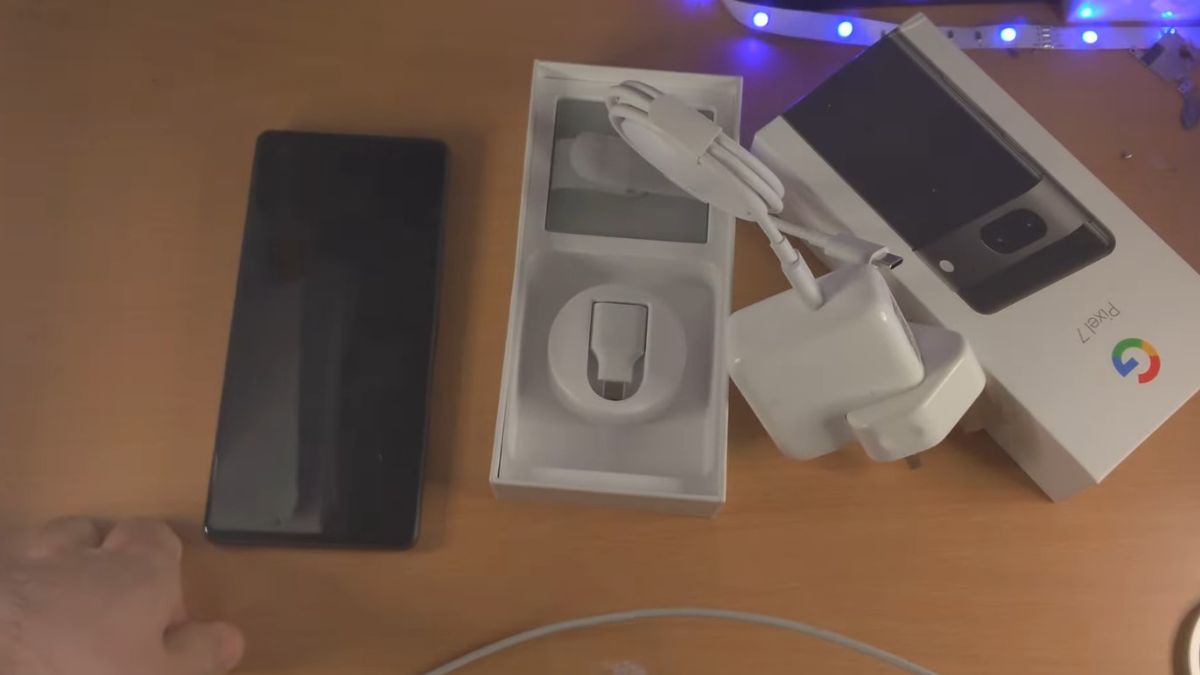
Recharging your smartphone overnight has become a reflex. You plug it in, place the phone on the bedside table, and expect to find it fully charged upon waking. However, this habit has an invisible cost on the battery’s lifespan. With Android 14, Google introduced a discreet setting on the Pixel 7 that specifically addresses this critical moment. Without changing habits or displaying intrusive alerts, this setting aims to reduce the progressive wear associated with long charges. A little-known option, but one that can make a difference after several years of use.
The Pixel 7 features a lithium-ion battery of 4355 mAh, a common format for smartphones in this range. This type of battery ages mainly due to two factors: high voltage and heat. Yet, an overnight charge often combines both.
When the phone reaches 100%, it doesn’t completely stop consuming energy. The system maintains the battery at full charge with small electrical pulses. This prolonged maintenance at maximum voltage accelerates internal chemical degradation. According to data published by Battery University, a lithium-ion battery kept at 100% for a long time can lose up to 20% capacity after about 500 full cycles. For a user charging their Pixel 7 daily, this threshold can be reached in less than two years.
Once the battery is full, the Pixel 7 enters a phase invisible to the user. The phone alternates between slight discharges and micro-recharges to stay at 100%. This oscillation gradually increases the internal temperature, even if the phone feels cool to the touch.
Laboratory tests show that a battery maintained at full charge for several hours can reach 35 to 38 degrees, compared to 30 to 32 degrees during a charge interrupted earlier. This difference seems small, but it has a cumulative effect. In the long term, it contributes to a faster decline in actual autonomy, even if the phone still displays a full charge.
With Android 14, Google has changed the logic of overnight charging on the Pixel 7. The system no longer systematically seeks to reach 100% as quickly as possible. Instead, it observes the user’s habits, particularly the times of plugging in and unplugging.
When the Pixel 7 is connected for a long period, the charge may stop around 75 to 80%. The rest of the energy is added later, gradually, so that the battery reaches 100% just before the estimated disconnection time. This approach significantly reduces the time spent at full voltage, without compromising autonomy upon waking.
The system relies on learning habits. If the Pixel 7 is plugged in every night around 11 PM and removed around 7 AM, Android 14 records this regularity. Over the days, it refines its estimate and automatically adjusts the charging curve.
If habits change, for example during a trip or waking up earlier than expected, the system adapts. In these situations, charging resumes normally to avoid any surprises. The user doesn’t have to configure anything each night or manually activate or deactivate the option.
Lithium-ion batteries do not handle prolonged high voltages well. A study conducted by Stanford University indicates that a battery kept between 30% and 80% ages significantly slower than a battery regularly maintained at full charge.
By reducing the time spent at 100% by several hours per night, the Pixel 7 limits the chemical fatigue of the cells. Over a full year, this represents hundreds of hours spent at a more moderate voltage. This simple shift is enough to slow down the loss of capacity in the long term.