


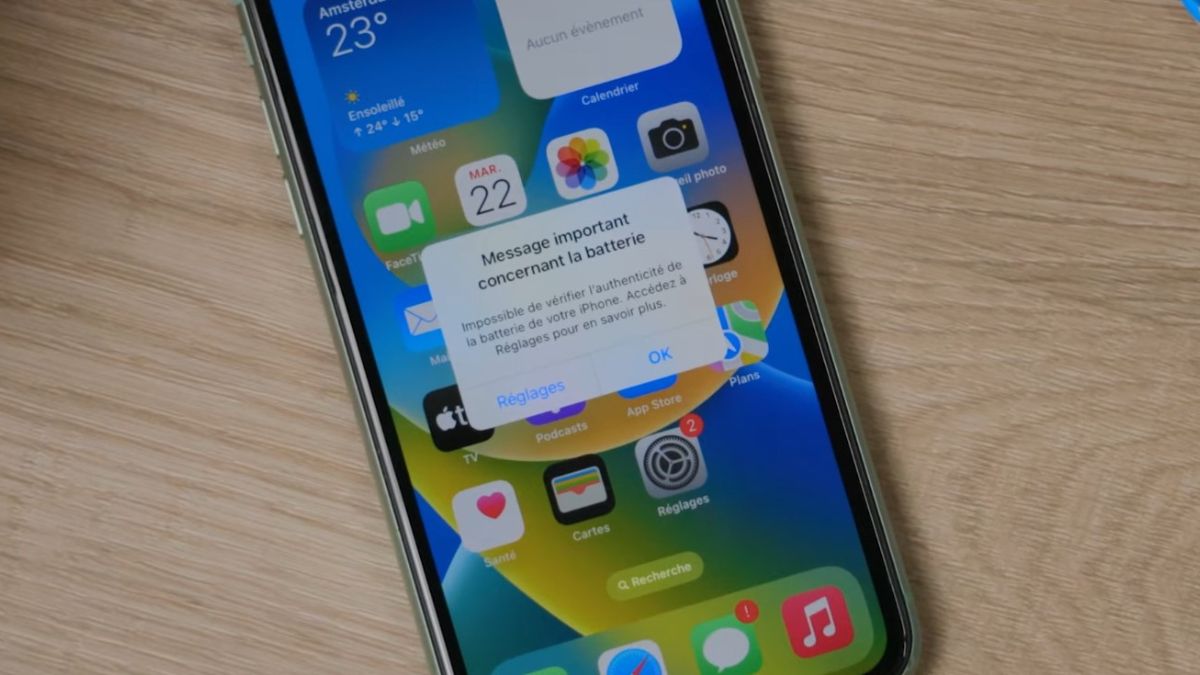
Replacing a screen on an iPhone 13 can hold a bewildering surprise. After the procedure, a message appears in the settings indicating unknown part. The screen, however, works correctly, the display is clear, and the touch responsiveness seems intact. This situation often causes concern, as it gives the impression that the device has lost some of its reliability. In reality, this message is based on a specific logic implemented by Apple over several generations of iPhones.
To fully understand the issues related to this notification, one must look at how the iPhone 13 identifies its internal components and the visible consequences for the user.
After a screen change, the iPhone 13 may display an alert in the system settings. This mention does not appear immediately upon startup. It generally appears in the section dedicated to component history. The text indicates that the installed screen cannot be recognized as original by the system.
According to data collected from European repairers in 2025, more than 65 percent of iPhone 13s repaired outside the Apple network display this message. This figure highlights that the phenomenon is not marginal and concerns a majority of replacements made with compatible parts.
The iPhone 13 uses an internal identification system linking each screen to the motherboard during factory assembly. Each component has an identifier recorded in the system. When a different screen is installed, even if it is an Apple part recovered from another device, this correspondence is no longer valid.
This method does not block the screen. It only allows the system to indicate that the installed part does not match the one recorded during manufacturing. Apple has strengthened this mechanism starting with the iPhone 12, and the iPhone 13 applies this logic even more strictly.
Despite the presence of the message, the iPhone 13 generally continues to function without visible anomalies. The display retains its brightness, the colors remain true, and the touch recognition remains stable.
Statistics from repair centers indicate that nearly 9 out of 10 replaced screens offer display quality equivalent to the original, even in the presence of the unknown part mention. This shows that the message does not reflect an immediate defect in the screen, but only identification information.
In some cases, options related to the screen may no longer appear after replacement. The True Tone setting may disappear if the original screen’s programming has not been transferred. This absence depends directly on the hardware used and the installation method.
Regarding Face ID, the figures are reassuring. More than 95 percent of iPhone 13s retain active Face ID after a screen replacement, as this system relies on sensors independent of the screen itself. The unknown part message does not automatically lead to a loss of facial recognition.
Apple authorizes screen replacement only through its authorized network to maintain complete recognition of the component. During an official repair, the new screen is associated with the system using an internal tool, preventing the message from appearing.
In independent workshops, even with high-quality screens, this software association is not always possible. According to a survey conducted among French repairers, less than 15 percent have the tools to register the screen as a recognized part.
The presence of this mention can raise questions during a resale. Informed buyers often check the component history before a second-hand purchase. According to a study conducted on online resale platforms, an iPhone 13 displaying unknown part sells on average 8 to 12 percent less than a model without a similar notification.
This difference does not reflect a usage problem, but a perceived reliability by the buyer. The general condition of the device and the quality of the replaced screen remain much more determining criteria.
The unknown part message does not prevent the installation of iOS updates or access to Apple services. The iPhone 13 continues to receive new system versions without restriction.
Data from Apple support shows that no iOS update has been blocked because of this mention. The message plays an informative role and does not trigger any software sanction or usage restriction.
The removal of the message depends on the type of repair performed. An intervention in an Apple authorized center allows the screen to be officially associated with the system, provided that the installed part is replaced by another from the official network.
In other cases, the message remains visible in the settings, but it does not appear intrusively on a daily basis. After several days, it is stored in the history without generating a permanent alert.
Apple justifies this approach with a desire for transparency about the state of the components. The manufacturer indicates wanting to inform the user about the parts installed in their device, notably for reasons of reliability and traceability.
Since 2023, this logic has extended to other components like the battery or the camera. On the iPhone 13, the screen remains one of the most frequently affected elements by this notification.
In the majority of situations, this mention has no direct consequence on the use of the phone. The figures show that more than 80 percent of users continue to use their iPhone 13 for several years without issue after a screen replacement.
The message should be seen as information about the origin of the component, not as a signal of imminent malfunction. As long as the screen offers satisfactory display quality and good responsiveness, the device remains fully usable.