


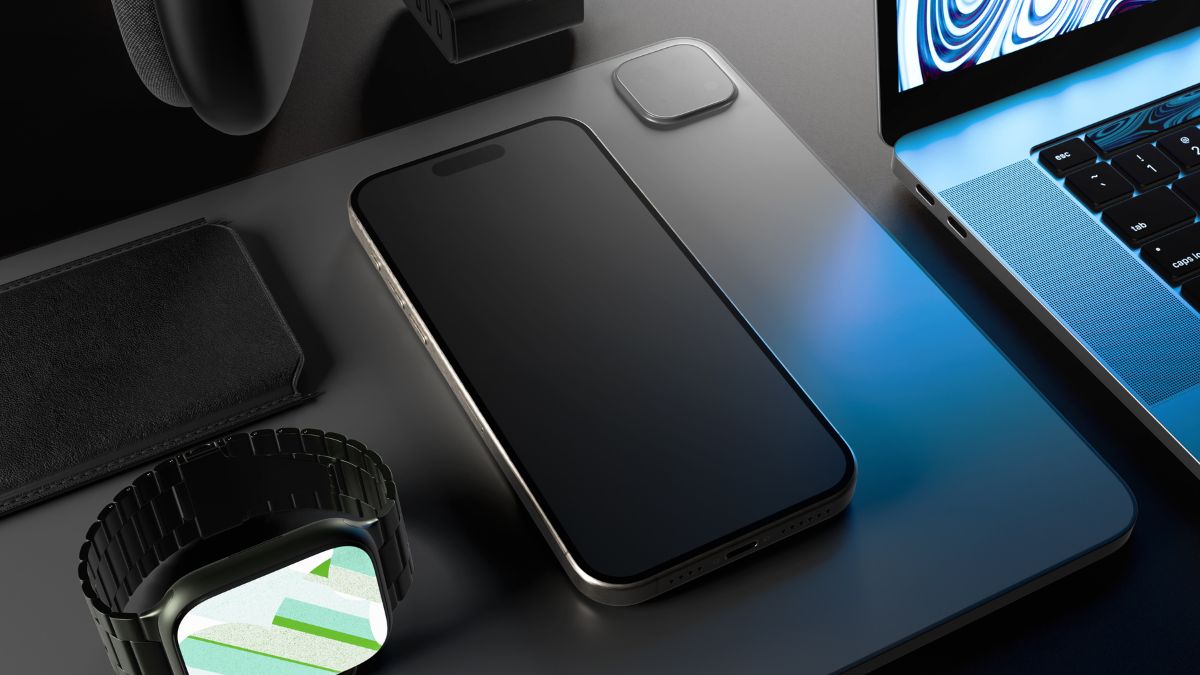
The directions taken by Apple suggest a much deeper evolution than just annual improvements. Between embedded artificial intelligence, design overhaul, and new interfaces, the iPhone of the future could progressively but decisively redefine the mobile experience. Several paths are already emerging through patents, industrial leaks, and the brand’s recent choices.
The next generations of iPhones should mark a clear visual break. After the introduction of the Dynamic Island, Apple is now exploring the complete integration of sensors under the screen. This notably includes the Face ID system, which could disappear from the visible surface to allow for an almost full display.
This evolution would reduce visible elements to a simple punch-hole for the front camera, or even make them completely disappear in the long term. The goal is to offer a continuous display surface, without visual interruption, which improves readability and immersion in content.
In parallel, there are hints of more advanced materials, such as partially transparent backs or thinner reinforced structures. Apple could also work on better resistance to shocks and scratches without making the device heavier, by optimizing alloys and industrial processes.
READ ALSO
One of the most structuring changes concerns the integration of artificial intelligence directly on the device. Apple is increasingly focusing on local data processing, notably with ever more powerful chips integrating advanced neural engines.
The Siri assistant should evolve significantly. The goal is to make it more contextual, capable of anticipating actions without a permanent connection. This approach improves privacy and reduces response times.
In concrete terms, this translates into functions like automatic message drafting, notification synthesis, or dynamic organization of apps. The iPhone becomes capable of suggesting relevant actions based on habits, without systematically going through remote servers.
This technical orientation reflects a stronger desire for independence from the cloud. Apple favors an architecture where most processing is done locally, ensuring better data control and a smoother experience.
Future generations of iPhones should continue to progress in terms of hardware, notably thanks to increasingly efficient chips. Finely engraved architectures allow for increased power while limiting energy consumption.
This evolution is felt in intensive tasks like video editing, gaming, or augmented reality applications. The iPhone maintains high performance over time, without notable slowdowns, even under heavy load.
Autonomy is also a strategic focus. Apple is working on denser batteries and finer software management. The goal is to extend actual usage time without excessively increasing battery size.
In parallel, thermal dissipation systems could evolve with the integration of solutions like vapor chambers. This allows for stable performance over long sessions without overheating, a critical point for powerful smartphones.
Photography remains a major field of innovation. Future iPhones should integrate more efficient sensors, capable of capturing more light and details, especially in challenging conditions.
But the most notable evolution concerns software processing. Apple is pushing computational photography even further, combining multiple images and analyzing the scene in real-time to produce an optimized rendering.
This results in sharper, better-exposed, and more balanced photos without manual intervention. Video also benefits from improvements, with enhanced stabilization and automatic adjustments based on movement and lighting.
Sensors could also increase in size, improving the overall quality of shots. Combined with embedded artificial intelligence, this evolution paves the way for advanced features like instant retouching or assisted content generation.
The iPhone of the future fits into a broader environment. Interactions with other Apple products become smoother and more coherent, whether it’s watches, headphones, or computers.
This continuity allows for seamless transitions from one device to another, with data synchronized in real-time. The iPhone acts as a central point in this ecosystem, facilitating exchanges and automations.
Apple is also exploring new interfaces, particularly around augmented reality. Future iPhones could serve as a base for immersive experiences, in connection with other connected devices.
Finally, software longevity remains a strong focus. Extended updates ensure lasting compatibility with new features, guaranteeing a performant device over several years without rapid obsolescence.