


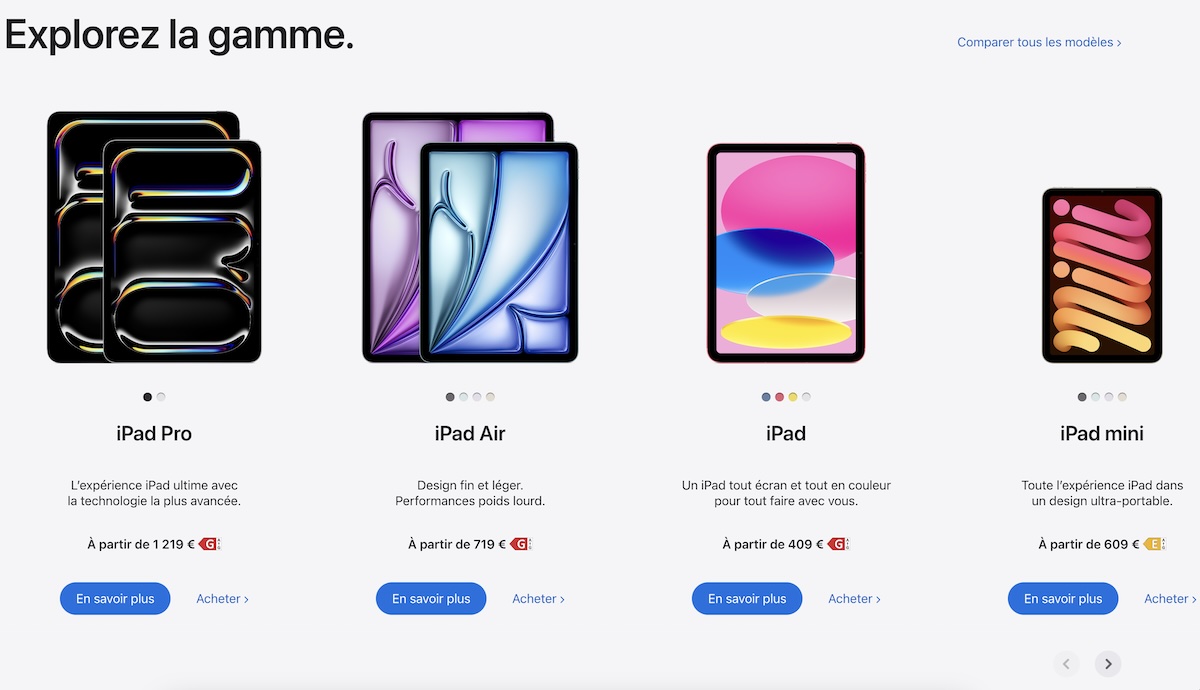
As the iPad 12 is about to enter the market, intriguing revelations from the iPadOS code suggest notable advancements in performance and connectivity. These discoveries could well redefine expectations for entry-level tablets.
Summary in 3 points
The iPad 12 marks a turning point by integrating the A19 chip, the same one used for the iPhone 17. This is a considerable advancement compared to previous generations of iPads, which often settled for older processors. This new chip promises to expand the tablet’s usage possibilities, especially for video gaming.
With its ability to handle AAA games without overheating, the iPad 12 establishes itself as a true portable gaming console. This performance is made possible by an improved thermal dissipation surface, ensuring smooth and prolonged gaming sessions.
The iPad 12 does not just improve its raw performance. The new N1 network chip, already present in the iPhone 17 range, brings significant improvements in terms of connectivity. It speeds up transfers via AirDrop and ensures a more stable hotspot connection.
Moreover, this chip contributes to better energy efficiency, thus extending the tablet’s battery life. These improvements strengthen the Apple ecosystem by offering a smoother and more coherent user experience.
Despite notable advancements, the iPad 12 makes some concessions to remain affordable. Although it supports the Wi-Fi 7 standard, it is not compatible with the 320MHz band, which limits the maximum theoretical speeds. This remains a logical decision to keep the device’s cost competitive.
Regarding 5G connectivity, the mystery remains about the possible integration of the C1 modem, already present on the iPhone 16e. This uncertainty could influence some users’ purchasing decisions, depending on their need for advanced mobile connectivity.
Since its introduction in 2010, Apple’s iPad has established itself as a benchmark in the tablet market. Initially designed to bridge the gap between smartphones and laptops, it quickly evolved to become a versatile tool used for both entertainment and productivity. Over the years, the iPad has integrated innovations such as the A12 Bionic processor, Retina display, and advanced multitasking features, thus consolidating its position in the market. Today, with the iPad 12, Apple continues to push technological boundaries to meet consumers’ growing expectations.