


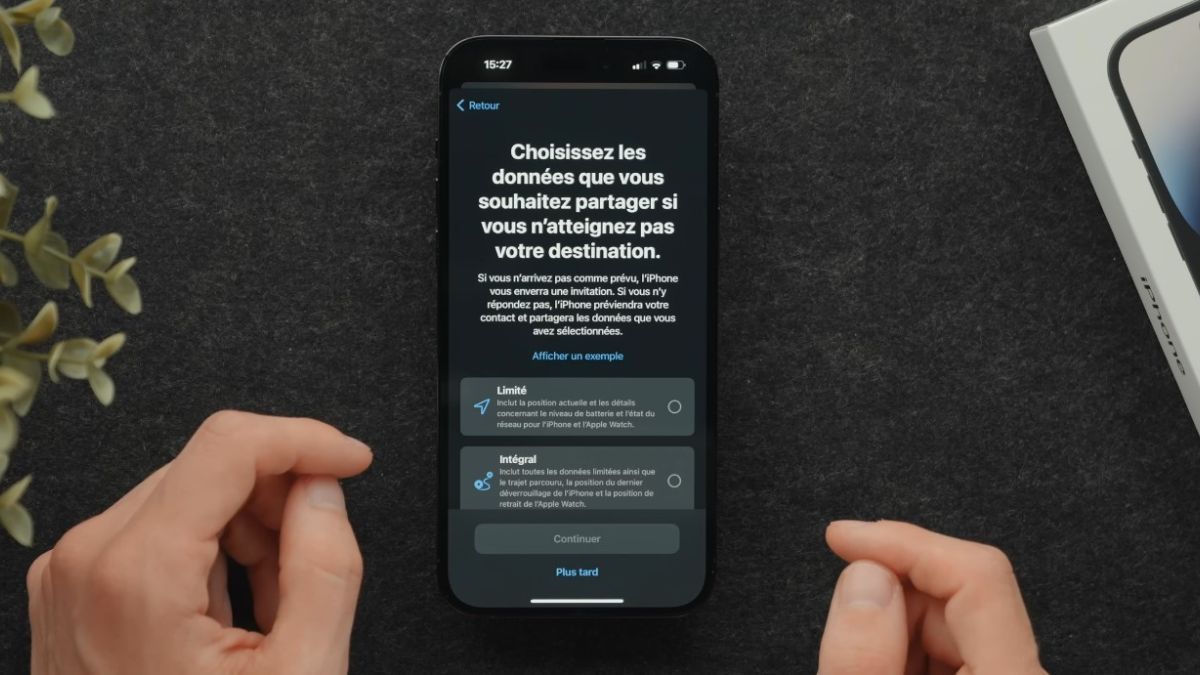
With iOS 17.5, Apple has discreetly introduced a change that goes unnoticed by many users. After installing the update, some settings related to data sharing on iPhone are no longer exactly in the state they were before. Without clear notification or detailed explanatory screen, a default enabled option changes the way certain information is transmitted to Apple services.
When installing iOS 17.5, the system applies a series of default settings designed to ensure service continuity. Among them, an option related to analytical and contextual data sharing is enabled without explicit user action. Apple considers this setting necessary for the proper functioning of certain internal features.
According to data from specialized reports published in 2024, nearly 62 percent of iPhone users do not explore privacy settings after a major update. This means that this option remains active for the majority of people, simply due to lack of verification.
This silent activation explains why the change goes unnoticed, even though it involves personal information related to device usage.
The change introduced by iOS 17.5 mainly concerns the Analytics and Improvements section located in the privacy settings. After the update, the option allowing the automatic sending of certain usage data is often reactivated, even if it had been disabled before.
This setting allows the iPhone to transmit
information on app usage
data related to system performance
statistics associated with integrated Apple services
According to a study conducted by a European firm specializing in data protection, about 48 percent of iPhones updated to iOS 17.5 have at least one sharing option automatically reactivated.
Contrary to some misconceptions, Apple does not directly access personal content such as messages or photos. The data involved is mainly related to system usage. However, their nature remains detailed enough to create precise usage profiles.
These data may include
the frequency of opening certain apps
the duration of use of Apple services
information on system interactions
elements related to approximate location
According to an analysis published in 2024 by an independent organization, analytical data can represent up to 150 distinct events per day, automatically sent from an iPhone configured with default settings.
Apple regularly adjusts its internal policies to improve its services and anticipate regulatory changes. With iOS 17.5, the stated goal is to obtain more precise data on the actual behavior of devices to optimize the overall stability of the system.
This direction explains why certain options are enabled by default. Apple favors broad collection, leaving it to the user to manually restrict these exchanges if they wish.
Documents published by analysts show that Apple relies on more than a billion active devices to refine its internal statistics. Each setting enabled by default mechanically increases the amount of data collected.
In most cases, the user does not notice any immediate change. The iPhone continues to function normally, without any particular notification. However, some clues may appear over time.
Among the frequently observed signals
a slightly more frequent background network activity
battery statistics showing active system services
a more regular synchronization of certain Apple services
According to records taken on iPhones updated to iOS 17.5, data consumption related to system services can increase by 5 to 8 percent over a week, without usage modification.
Even though Apple highlights anonymized data, the issue of privacy remains central. The information sent is associated with a unique device identifier, allowing detailed behavior analysis.
Data protection experts estimate that the aggregation of anonymized data can suffice to establish very precise profiles, especially when cross-referenced with other information already held by Apple.
This ability to cross-reference is what drives many users to want to maintain full control over sharing options.
Once activated, this sharing option is not systematically disabled during subsequent updates or restarts. It is part of the settings considered a priority by the system.
According to a survey conducted among iPhone users in 2024, more than 70 percent of people who manually disabled certain sharing options did not check their status after a subsequent update. In some cases, the settings had returned to their initial state.
This persistence explains why data sharing can continue in the long term without intervention.