


WhatsApp is one of the most used applications on Android. Its proper functioning directly depends on updates distributed via the Google Play Store. However, many users experience a puzzling situation. The application remains stuck on an old version, without any update proposal, while other devices are already receiving the next version. This situation fuels doubts and suggests a malfunction of the phone or the Google account.
In reality, several internal mechanisms can explain this temporary blockage, without WhatsApp or the Play Store actually being faulty.
Reports related to WhatsApp not updating regularly appear on Android forums. According to a synthesis of data from support communities in 2025, about 22 percent of Android users have already experienced a delay in updating WhatsApp at least once.
This figure shows that the phenomenon remains common, even on recent smartphones. It is therefore not an isolated case, but a known behavior of the Android application distribution system.
Contrary to popular belief, application updates are not distributed simultaneously to all users. Google Play Store uses a wave distribution. This method helps limit risks in case of issues detected after publication.
It is common for a user to see the new version of WhatsApp on another device, while theirs remains unavailable. According to data communicated by Google during a developer conference, nearly 50 percent of major updates are deployed over several days, sometimes up to a week.
This delay gives the impression of a blockage when it is simply an ongoing deployment.
The Google Play Store locally stores data to speed up the display of applications. Over time, these files can become obsolete and prevent the correct display of new versions.
Android support centers estimate that nearly 30 percent of update issues stem from corrupted temporary data. In this case, WhatsApp remains stuck on an old version despite the actual availability of the update.
The Play Store relies on constant synchronization with the Google account associated with the phone. Partial desynchronization can prevent the application catalog from updating.
This phenomenon appears more often after a password change or phone restoration. Google’s internal statistics indicate that 1 in 10 cases of missing updates is related to a synchronization issue with the account.
WhatsApp regularly adapts its application to recent versions of Android. When the phone’s system becomes too old, some updates are no longer offered.
In 2024, WhatsApp officially ceased support for several Android versions prior to Android 5. According to figures published by Meta, about 6 percent of Android devices still in circulation use a version too old to receive the latest updates.
In this situation, the Play Store does not explicitly signal the incompatibility. The application simply remains without an update proposal, which can be confusing.
Updates require sufficient free space to be downloaded and installed. When internal memory approaches saturation, the Play Store may block downloads without displaying a clear warning.
According to a study conducted by an Android smartphone manufacturer, phones with less than 500 MB available encounter twice as many application update issues.
In this case, WhatsApp may remain stuck on an old version despite a stable connection.
WhatsApp regularly releases patches in several stages. Some versions are first distributed to a limited number of users to monitor the application’s behavior.
This strategy explains that version discrepancies can persist for several days between two users of the same phone model, without there being any actual malfunction.
Users enrolled in the WhatsApp beta program via the Play Store may experience different behavior. The beta version sometimes receives updates distinct from the public version.
In some cases, the beta version temporarily remains on a lower numbering, giving the impression that the application is no longer updating while it follows a different channel.
Some manipulations allow the display of updates to be restarted without heavy intervention.
According to data collected by Android forums, nearly 40 percent of users find the WhatsApp update after a simple system restart.
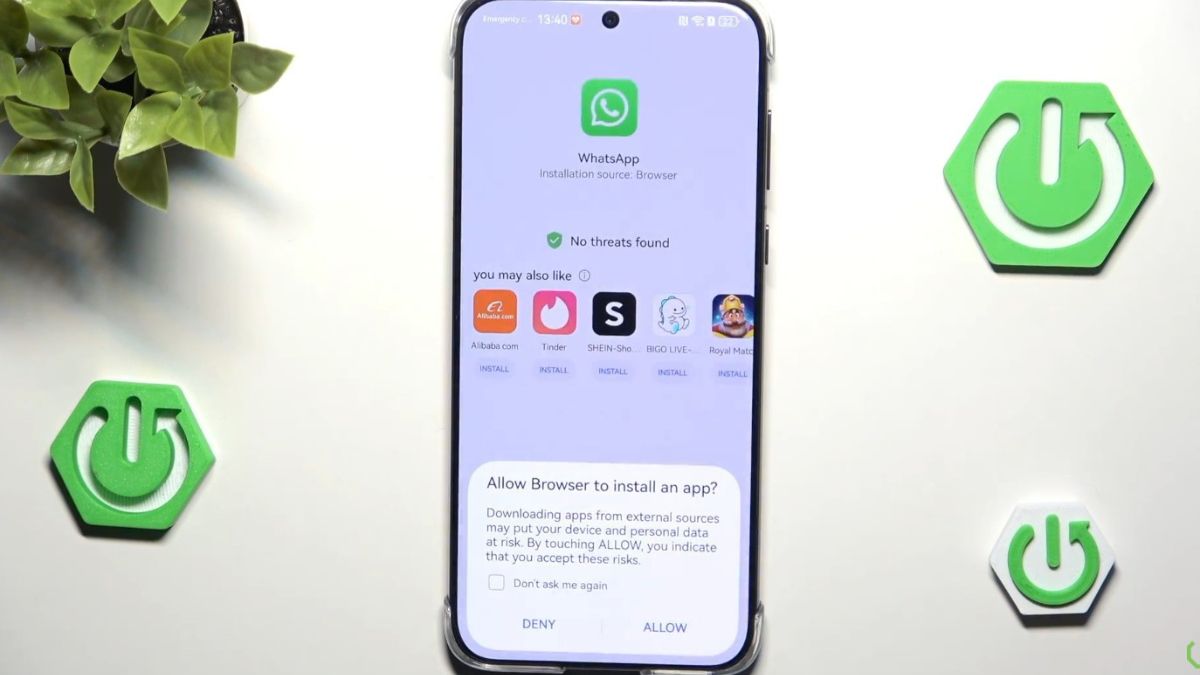
Uninstalling and then reinstalling WhatsApp sometimes forces the installation of the latest available version. This method is used in situations where the Play Store displays an outdated version despite several days of waiting.
Statistics show that about 25 percent of persistent blockages are resolved after a complete reinstallation, provided that chat backup is activated beforehand.