


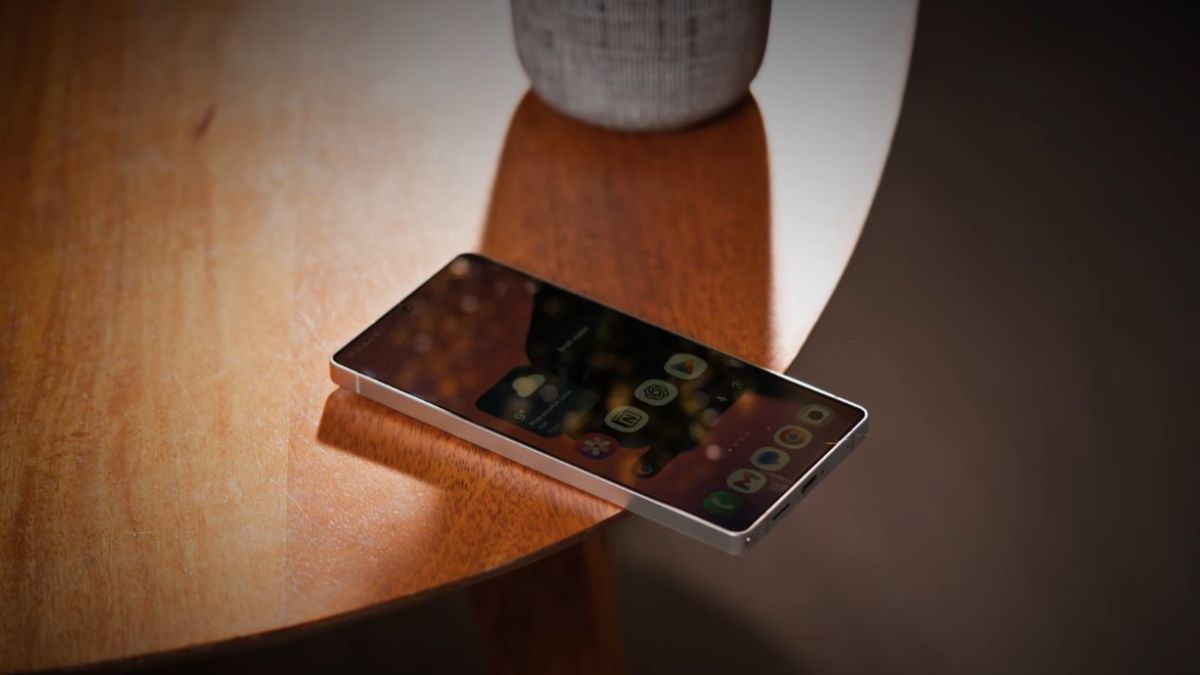
The Galaxy S26 Ultra is starting to make waves well before its official presentation, and this time it’s neither the raw power nor the photography that is drawing attention. A new smart display mode has surfaced, designed to address an increasingly common concern among users: visual privacy. In public transport, public spaces, or shared places, a smartphone screen becomes an open window to sensitive data. Samsung seems to have decided to tackle this issue at its root, directly at the screen level.
This mode, called Privacy Display, does not merely darken the screen or alter the colors. It relies on advanced hardware technology combined with an intelligent software layer integrated into One UI 8.5. The goal is clear: to make the screen perfectly readable for its owner while making it almost unreadable for anyone situated on the sides. A radically different approach from traditional solutions that rely on physical accessories.
With the Privacy Display, Samsung is addressing a very concrete problem. In crowded places, a side glance is enough to access private messages, banking information, or personal content. Until now, the response involved specific protective films, often cumbersome and rarely visually satisfying. The Galaxy S26 Ultra aims to offer an integrated solution, directly at the heart of the screen.
The technology at the center of this device is called Flex Magic Pixel. Developed by Samsung Display, it allows extremely precise control of pixel orientation. Instead of diffusing light uniformly in all directions, the screen adjusts the diffusion to concentrate visibility towards the frontal axis. The result: a user facing the screen retains a clear image, while an observer on the side perceives a darkened or even blurred display.
What truly sets the Privacy Display apart from existing solutions is the integration of artificial intelligence in the process. The Galaxy S26 Ultra does not merely activate a static filter. The AI continuously adjusts the behavior of the pixels based on the situation, viewing angle, and usage context.
This dynamic adaptation allows for excellent readability for the user without degrading the visual experience. Unlike physical filters that significantly reduce brightness and alter colors, the system developed by Samsung acts in a targeted manner. The screen remains clear and precise for the person in front, while becoming much less exploitable for a side glance.
Samsung also relies on CoE Color Filter Encapsulation technology, already used on some foldable models. This layer allows for maintaining good brightness and faithful color rendering, even when the privacy filter is activated. The Galaxy S26 Ultra thus combines advanced hardware and software optimization to offer a discreet but remarkably effective solution.
The Privacy Display would not be a simple hidden button in the settings. Samsung plans for deep integration within One UI 8.5, with several activation methods adapted to real-world uses. The user can activate the mode manually from the settings or via a shortcut in the quick panel, but that’s only part of the experience.
The system could also allow for automatic programming. The Galaxy S26 Ultra would be capable of activating the mode based on specific locations, defined times, or the opening of sensitive applications. A banking app, private messaging, or password manager could thus automatically trigger the Privacy Display without manual intervention.
Samsung would also plan several privacy levels, including a mode called Maximum privacy. In this configuration, the side viewing angle would be extremely restricted, at the cost of a slight adjustment of perceived brightness on the sides. This modularity would allow each user to adapt the screen’s behavior to their habits and environment.
One of the great advantages of the Privacy Display lies in the fact that it effectively replaces traditional protective films. These accessories, often thick and expensive, degrade display quality and hinder tactile comfort. By integrating protection directly into the screen, the Galaxy S26 Ultra eliminates these compromises.
This approach also offers greater flexibility. A physical film imposes permanent privacy, even when it is not necessary. With Samsung’s system, the user chooses when to activate or deactivate the protection without altering the screen’s appearance the rest of the time. The smartphone thus retains all the visual richness expected of an Ultra model.
In public transport, cafes, or waiting rooms, this technology becomes a true digital shield. Sensitive information remains visible only to its owner, significantly reducing the risk of unintentional exposure. The Galaxy S26 Ultra thus positions itself as a device designed for modern uses where mobility comes with new privacy challenges.
Samsung seems to want to make the Galaxy S26 Ultra the first ambassador of this technology. The launch would be closely linked to the arrival of One UI 8.5, expected at the beginning of 2026. If this feature is well received, it could then be extended to other models in the range, but the Ultra would maintain an edge thanks to its next-generation screen.
This strategic choice shows an evolution in the way high-end smartphones are designed. Beyond performance and design, Samsung emphasizes concrete uses related to privacy and data security. The Privacy Display illustrates this orientation by offering an elegant solution to a daily problem without imposing visible constraints.