


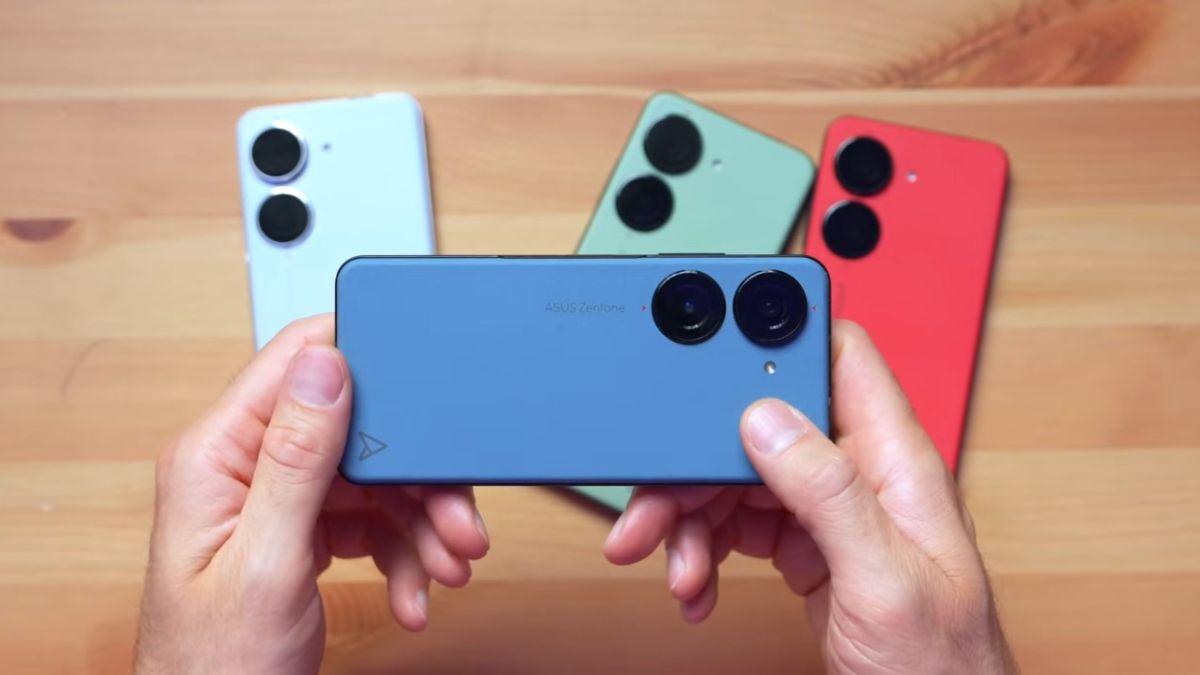
For years, Asus has followed a unique trajectory in mobile telephony. Without trying to compete directly with the giants of the sector, the Taiwanese brand offered recognizable smartphones, driven by deliberate choices. However, the year 2026 marks a clear break. The announcement of a total absence of new Zenfone and ROG Phone acts as a strong signal for the entire industry. Behind this decision, it is not just a simple slowdown but a profound questioning of the smartphone’s place in Asus’s overall strategy. This pivotal moment reveals a lasting evolution, dictated by economic constraints that have become difficult to ignore.
The announcement quickly circulated in specialized circles. No new Asus smartphone planned for 2026. Neither an evolution of the Zenfone range nor a new generation of ROG Phone. This absence contrasts with the habits of the sector, where each year is organized around carefully planned launches.
For distributors, this silence equates to a temporary sidelining. Operators build their catalogs several months in advance. Without a product calendar, Asus mechanically disappears from commercial priorities. This situation greatly reduces the brand’s visibility, even among a historically loyal audience.
The smartphone is an expensive product to design and produce. In recent years, the pressure on components has increased. Between 2024 and 2025, the price of mobile DRAM increased by about 35 percent, while NAND flash recorded a rise close to 30 percent according to data from specialized firms.
These two elements represent a significant part of the total cost of a device, often exceeding 20 percent. Added to this are OLED screens, advanced photo sensors, and high-end chips, whose prices follow a similar trajectory. For Asus, which does not benefit from volumes comparable to those of the leaders, absorbing these increases becomes extremely difficult.
Contrary to some misconceptions, selling smartphones does not guarantee comfortable profitability. The average net margin of the mobile sector remains below 5 percent for the majority of manufacturers outside the ultra-premium segment. Asus is not exempt from this reality.
Each new model requires high investments in design, international certifications, logistics, and communication. However, the volumes achieved by the Zenfone and ROG Phone, although respectable, are no longer sufficient to balance the scales. Even with a positive image, the financial return no longer follows.
The global context further accentuates the difficulties. Global smartphone sales fluctuate around 1.1 to 1.2 billion units per year, a stable level for several years. At the same time, the lifespan of a phone is increasing. In Western Europe, it now exceeds three years on average.
This evolution mechanically reduces the frequency of purchase. Brands are competing for a global volume that no longer increases. Each launch becomes riskier, each mistake more costly. For a manufacturer positioned on targeted segments, the room for maneuver is greatly reduced.
Asus has long relied on a marked identity. The Zenfone focused on more compact formats, where the majority of the market favored ever-larger screens. The ROG Phone clearly targeted mobile gaming enthusiasts, with deliberate hardware orientations.
These choices have allowed the creation of a loyal community. However, the numbers remain relentless. Gaming-oriented smartphones represent less than 3 percent of global sales. Even with a strong image, this segment does not allow securing sufficient volumes to offset rising costs.
Faced with this unfavorable equation, Asus has made a clear choice. The brand now focuses its resources on areas offering better financial prospects. Artificial intelligence, personal computers, and physical robotics now take center stage.
These sectors show much more favorable dynamics. The PC market integrating local AI capabilities is experiencing an estimated annual growth of over 40 percent from 2025 to 2027. Margins are significantly higher than those of smartphones, often ranging between 12 and 18 percent depending on the segments.
Unlike mobile, these activities correspond to Asus’s history and expertise. The brand already enjoys a solid reputation in motherboards, laptops, and workstations. It has the supply chains and partnerships necessary to scale up without starting from scratch.
This reorientation also reassures investors. It reduces exposure to a volatile segment and strengthens the group’s financial stability in the medium term.
Officially, Asus mentions a prolonged pause. This wording deliberately leaves room for doubt. However, the recent experience of the sector invites caution. Examples of brands that have announced similar pauses show that a return becomes increasingly complex over time.
Teams reorient, suppliers change priorities, consumers turn to other references. Each year without a launch makes a potential return more costly and less credible.