


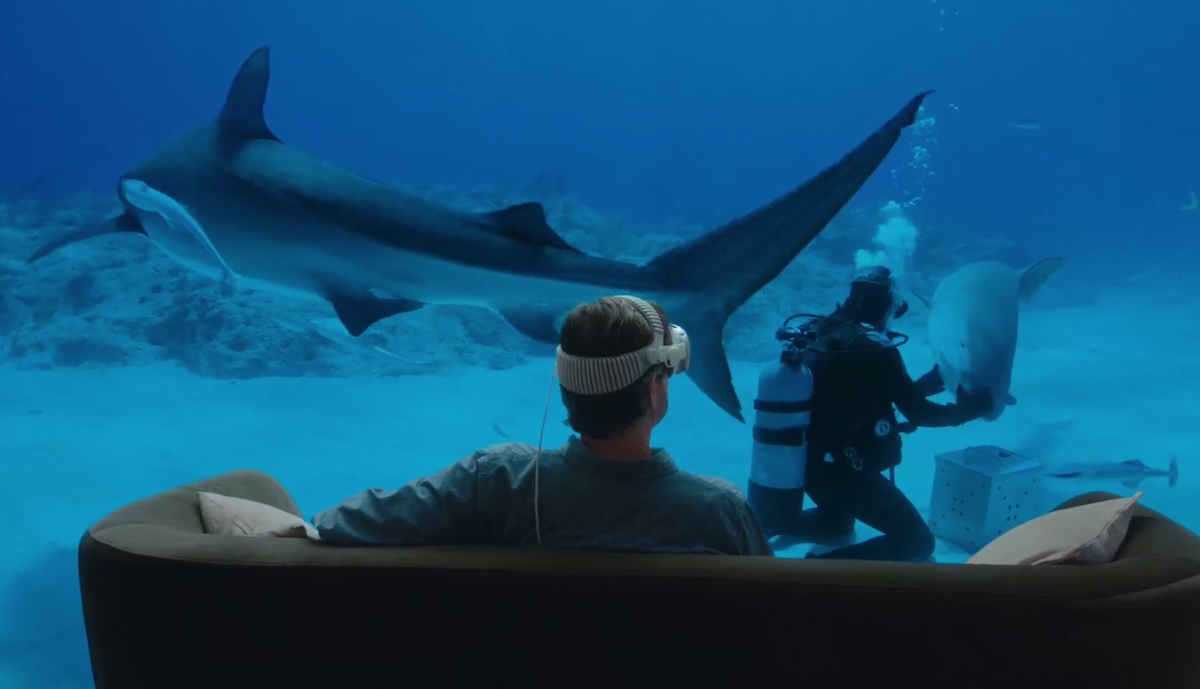
When Apple launched its virtual reality headset, the Vision Pro, many expected a revolution in digital interaction. However, sales did not meet expectations, leading to a significant slowdown in production and promotion. A look back at the reasons for this unexpected failure and the implications for the Cupertino giant.
The essentials to remember
Apple’s initial ambitions for the Vision Pro have been revised downwards. In 2023, during its presentation, the headset was expected to be a major innovation, allowing interaction with digital content projected in space. However, disappointing sales prompted Apple to drastically reduce production. According to IDC, the units manufactured in 2025 are already sufficient to meet the expected demand in 2026.
The halt in production by Luxshare, Apple’s Chinese partner, marked a turning point. Only 45,000 headsets were planned for the last quarter of 2025, a period usually conducive to significant sales. This situation reflects a strategic adjustment in response to demand well below forecasts.
Apple has also reduced its marketing efforts for the Vision Pro, limiting its availability to thirteen countries and decreasing its advertising expenses by 95%, as reported by Sensor Tower. This strategy has restricted the product’s visibility, preventing it from capturing a wider audience. The contraction of marketing investments reflects a cautious approach, aiming to sell off existing stock rather than stimulate insufficient demand.
Despite its advanced features, the Vision Pro struggles to appeal to the general public. Its price of $3,499, combined with a limited application catalog, makes it a product primarily intended for professionals and enthusiasts. In sectors such as healthcare, specialized training, or industrial design, the headset offers immersive environments thanks to its precise motion tracking and high resolution. However, these advantages are not enough to offset the technical constraints and high cost for general public use.
Apple, founded in 1976 by Steve Jobs, Steve Wozniak, and Ronald Wayne, has been a pillar of technological innovation for decades. With iconic products such as the iPhone, iPad, and Mac, the company has redefined industry standards. The Vision Pro, although not meeting the expected success, is part of this tradition of exploring new paths.
Despite this failure, Apple continues to position itself at the forefront of the sector, seeking to combine cutting-edge technology with sustainable development. The recalibration of Vision Pro production could even mark a step towards more responsible practices, limiting stock surpluses and the company’s ecological footprint.